
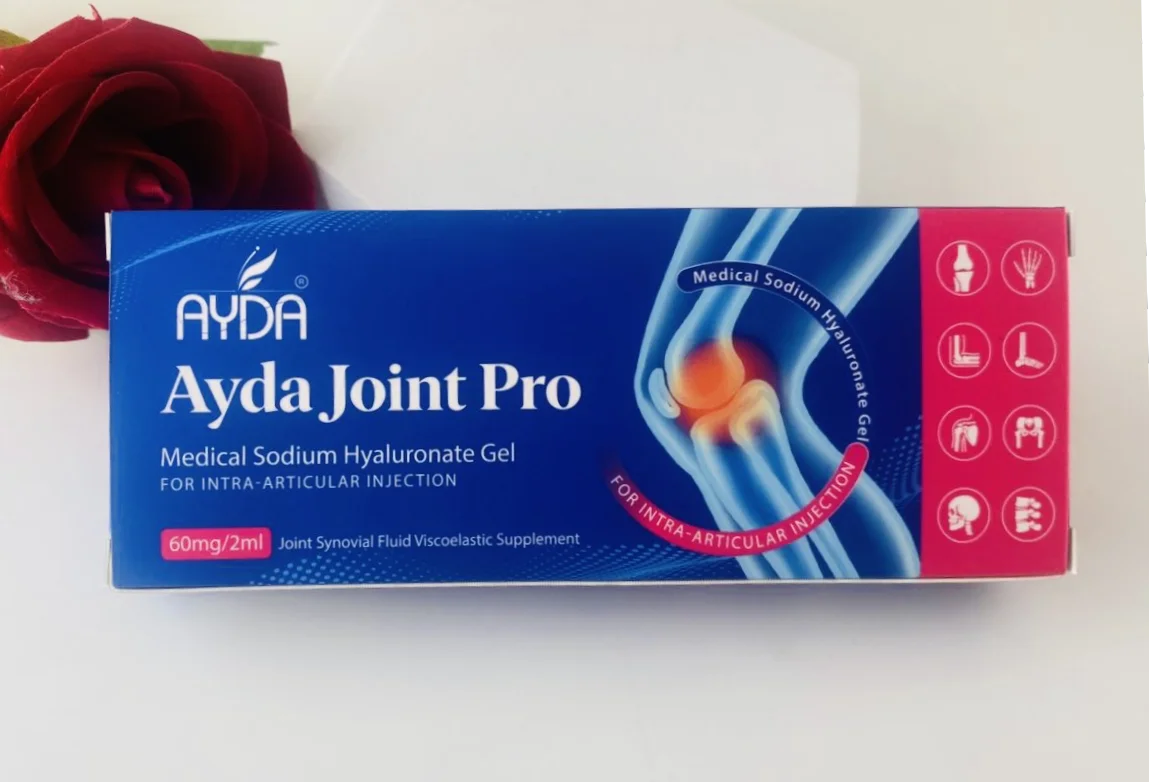
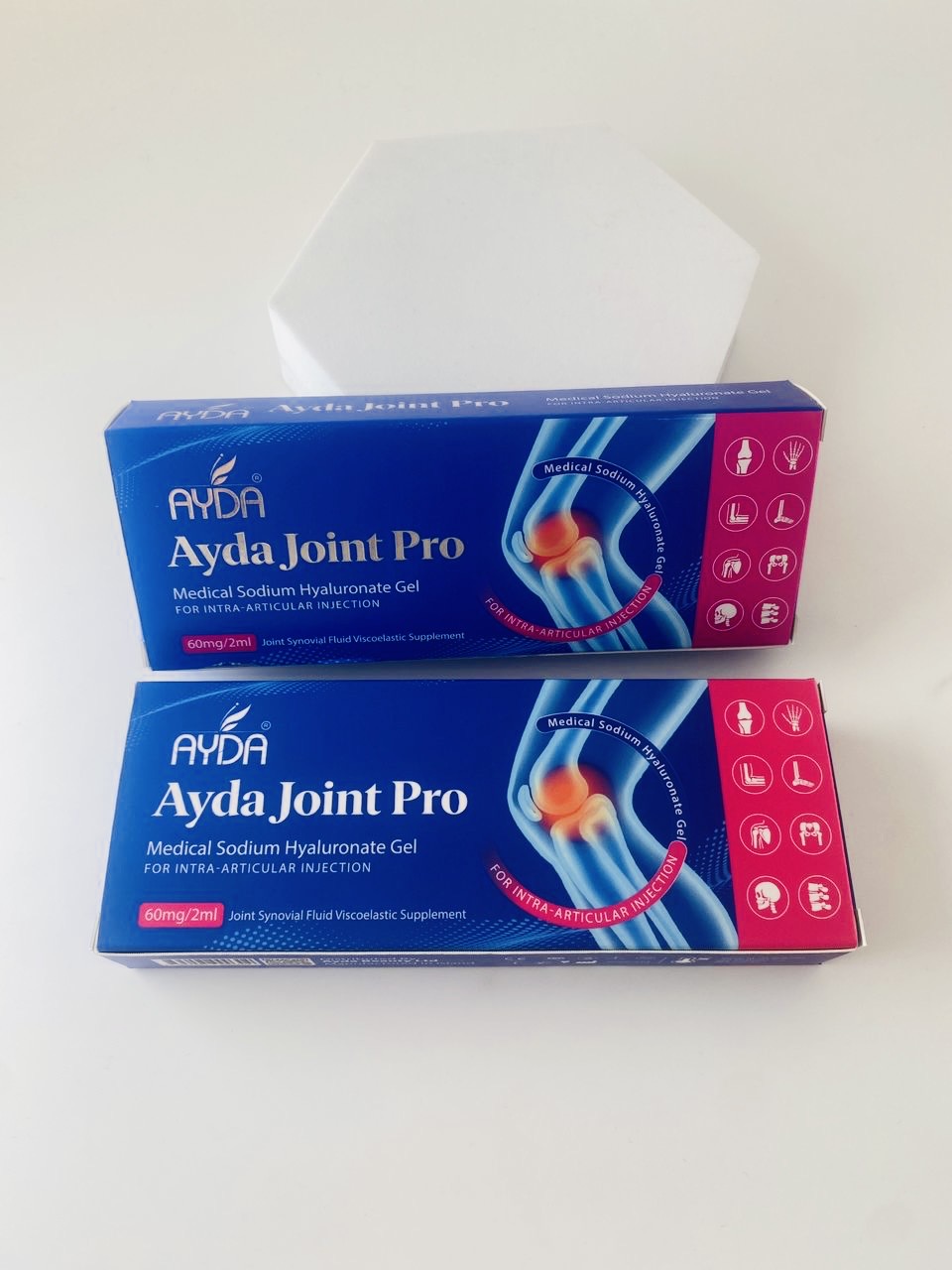
This product is a sterile, non-pyrogenic, non-inflammatory, viscous liquid joint synovial fluid viscoelastic supplement, composed of non-animal derived sodium hyaluronate. Hyaluronic acid is a natural high-molecular-weight polysaccharide, consisting of repeating units of N-acetylglucosamine and glucuronic acid monomers. It is found in the same form in various animal tissues, including the skin, subcutaneous tissue, connective tissue, joint synovial fluid, and synovial membrane. The product is filled in a sterile glass syringe, which has been terminally moist heat sterilized. Each syringe contains 60 mg/mL of sodium hyaluronate, with a pH value ranging between 6.8 and 7.5.
Indications
For the treatment of pain in patients with degenerative knee osteoarthritis, limited to use when conservative non-pharmacological treatments and general analgesics (such as acetaminophen) have proven ineffective.
Precautions
- Do not use if the packaging is found to be opened or damaged.
- The contents of the product remain sterile until the packaging is opened or damaged. The product must be used immediately after opening. Discard any unused portion promptly.
- This product is derived from biological fermentation and is highly purified but may still contain trace amounts of protein. Physicians should be aware of the potential risks associated with the injection of biological agents. Caution is advised when using this product in patients with severe allergic conditions.
- Caution is advised when using this product in patients diagnosed with venous or lymphatic obstruction in the legs.
- Caution is advised when using this product in patients with crystal deposition joint disease (chondrocalcinosis).
- The correctness of the injection procedure may affect the risk of infection. To avoid infection, strictly adhere to standard aseptic techniques.
- Temporary pain and swelling may occur at the injection site after administration. Appropriate treatment may be provided by the physician.
- In cases of joint effusion, remove the effusion using aseptic techniques before injecting the product. Do not use the same needle for both removing the effusion and injecting the product. Carefully remove the syringe and needle cap using aseptic techniques.
- As with any invasive joint procedure, avoid excessive use of the knee joint immediately after the procedure. Do not use this product if the patient cannot access medical care within 48 hours after the procedure.
- The safety and efficacy of repeated injections of this product have not been established.
- The safety and efficacy of using this product in areas outside the knee joint or for symptoms other than degenerative arthritis have not been established.
- The safety and efficacy of using this product in combination with other intra-articular injection products have not been established
- The safety and efficacy of this product have not been evaluated in pregnant or breastfeeding women or in children
- Experimental results show that sodium hyaluronate products mixed with quaternary ammonium compounds produce a milky-white precipitate. This product must not be injected using devices cleaned with quaternary ammonium compound cleaners.
- Used syringes and any unused materials must be discarded immediately and must not be reused. Unused materials still carry a risk of contamination, and reuse may lead to infection. Medical waste should be disposed of in accordance with local regulations or hospital/clinic guidelines.
- Do not use local anesthetics if the patient is known to be allergic or sensitive to them.
Adverse Reactions
Sodium hyaluronate is a natural component of human tissues and is generally well-tolerated by the body. Temporary post-operative inflammatory reactions have been reported. Possible adverse reactions associated with the injection of this product include: Pain at the injection site, Inflammation, Swelling and/or stiffness of the knee joint, Effusion, Local skin reactions (such as rash or patches), Itching, Skin eruptions, Nausea, Headache, Fatigue, Shortness of breath, Flushing
These symptoms typically resolve naturally within one to two weeks after the injection. If the symptoms do not subside after two weeks or if other adverse reactions occur, please seek medical attention promptly and report the incident to the distributor or manufacturer.
Attaching the Needle to the Syringe
To ensure the safe and smooth use of this product, it is essential to correctly attach the needle. Below are the proper steps for attachment:
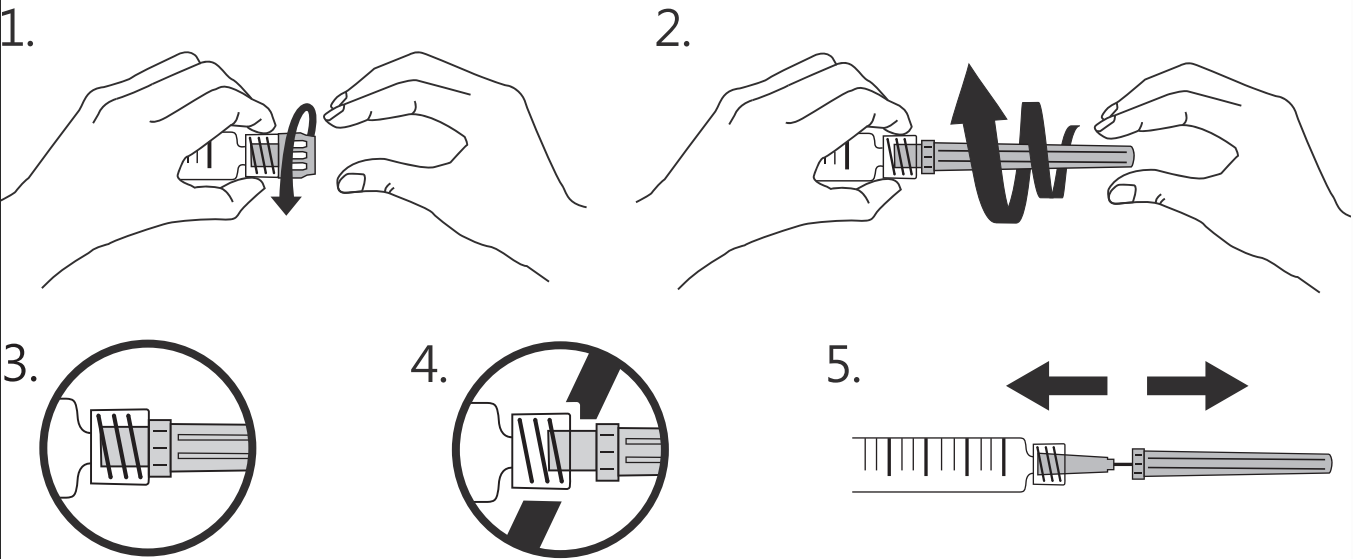
- Carefully loosen the cap at the top of the syringe as shown in Figure 1
- Hold the connector firmly and attach the provided needle to the syringe as shown in Figure 2. Slowly rotate the needle in a clockwise direction. During this process, avoid twisting the front spiral connector of the needle.
- Continue rotating the needle until it is fully secured to the connector of the syringe, as shown in Figure 3. Figure 4 illustrates incorrect attachment.
- Hold the connection point between the syringe and the needle with one hand, and hold the needle cap with the other hand. Pull the cap off by applying force in the opposite direction, as shown in Figure
- Before injection, gently press the syringe plunger until the product flows out of the needle. If the needle becomes blocked, do not apply additional pressure to the plunger. Stop the injection and replace the needle.
Incorrect attachment may cause the needle to detach from the syringe during injection or result in product leakage at the connector.
Usage Instructions
This product must be administered by a qualified and licensed healthcare professional in accordance with local regulations. Before injection, the injection site should be cleaned and disinfected using an appropriate antiseptic solution. It is recommended to use a 20G x 11/2TW (0.9 x 38 mm) sterile needle for intra-articular injection. Only one injection per treatment course is recommended, with a suggested dose of 3 mL per knee joint. Strict adherence to aseptic techniques is required during the injection process. If there is effusion in the joint cavity, it should be aspirated using a syringe before administering the product.
Storage Instructions
When stored in its original packaging and at the appropriate temperature, this product has a shelf life of 2 years.
The optimal storage conditions for this product are between 2°C and 25°C. Avoid exposure to light, heat sources, and low temperatures. Do not freeze.
Product Specifications
- Sodium Hyaluronate: 60 mg/mL.
- Physiological Saline: Q.S. (Quantity Sufficient)
Based on a preclinical substantial equivalence evaluation with domestically approved products, the estimated duration of efficacy for this product is 12 months.
Warnings
- This product is for single-use injection only.
- This product cannot be resterilized
- This product is only for intra-articular injection into the knee joint and must not be injected into blood vessels or outside the joint cavity.
- If effusion is present, remove the joint effusion before injecting this product.
- Do not use this product with cleaning agents containing quaternary ammonium salts, as sodium hyaluronate may react with these compounds, leading to precipitation